Mechanics
Fog of war
Every tile on the map is in one of three states:
- Dark — never seen. Neither the terrain nor its contents are known.
- Stale — seen before, but not currently in vision. The last seen state is shown faded; unit and city information is not updated.
- Visible — in vision right now; everything is current.
Lifted fog is permanent: terrain knowledge never goes dark again. What you lose is freshness, not the map.
Vision ranges
Vision radius is measured in hex steps and is part of each unit's stat block:
| Name | Cost | Upkeep | Move | Attack | Defense | HP | Vision | Attack vs. city | Requires |
|---|---|---|---|---|---|---|---|---|---|
| Pioneer | 3 | 1 | 6 | 1 | 1 | 8 | 5 | 1 | — |
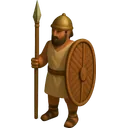
| Spearman | 4 | 1 | 4 | 2 | 3 | 12 | 4 | 2 | — |
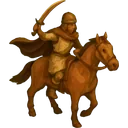
| Raider | 6 | 1 | 6 | 4 | 1 | 10 | 4 | 2 | Horse pasture |
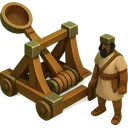
| Siege | 8 | 1 | 4 | 2 | 1 | 8 | 4 | 6 | Iron deposit |
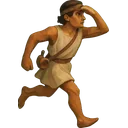
| Scout | 2 | 1 | 8 | 0 | 1 | 5 | 7 | 0 | — |

Cities see 2 steps; a city with Walls sees 3.
What the fog is for
Scouting has its own unit: the Scout sees the furthest and walks the furthest, but it cannot attack. What separates it from the Pioneer is not a price difference but a trade-off — keeping a Pioneer in the fog costs you a city you never founded.
There is more than information behind the fog: Ruins pay out gold, food or map once, and the first unit to step on one takes it. That is why the return on scouting is countable rather than abstract.
The practical consequence: scouting is not a luxury, it is an investment in information. Producing a Siege before you have seen a rival city wastes resources — and the AI opponent plays by exactly that rule.
The numbers on this page are read from the game’s balance tables.